
The Ultimate Guide to French Tuition in Hong Kong: 2026 - Which School is Best for Learning French? A Complete Guide to Courses, Fees, and Exams

In Hong Kong, whether preparing for public examinations (such as IB and DSE) or breaking through in the workplace, choosing the right French language course is a crucial first step to success. This article will provide you with a detailed comparison of different types of French courses, analyze various exam requirements, and offer practical tips for choosing a French school to help you easily plan your learning path.
Key Summary
Learning should be divided into stages : children (3-9 years old) should focus on their interests; teenagers (10-16 years old) need to prepare for academic exams; and adults (17 years and older) should pursue efficiency and practicality.
Model selection : Small class teaching (2-6 people) has a good atmosphere and high cost performance, which is suitable for beginners; private tutoring is more flexible and can focus on training for individual goals (such as the DELF exam).
Exam strategies : DELF is an internationally recognized language proficiency certificate; IGCSE, IB and HKDSE are important assessments for admission to local and international schools, each with different focuses.
Selection criteria : When choosing a French course, you must consider the teachers (whether they are native French speakers), course design, teaching methods, location, and cost-effectiveness.
Why is French an important asset for Hong Kong students?
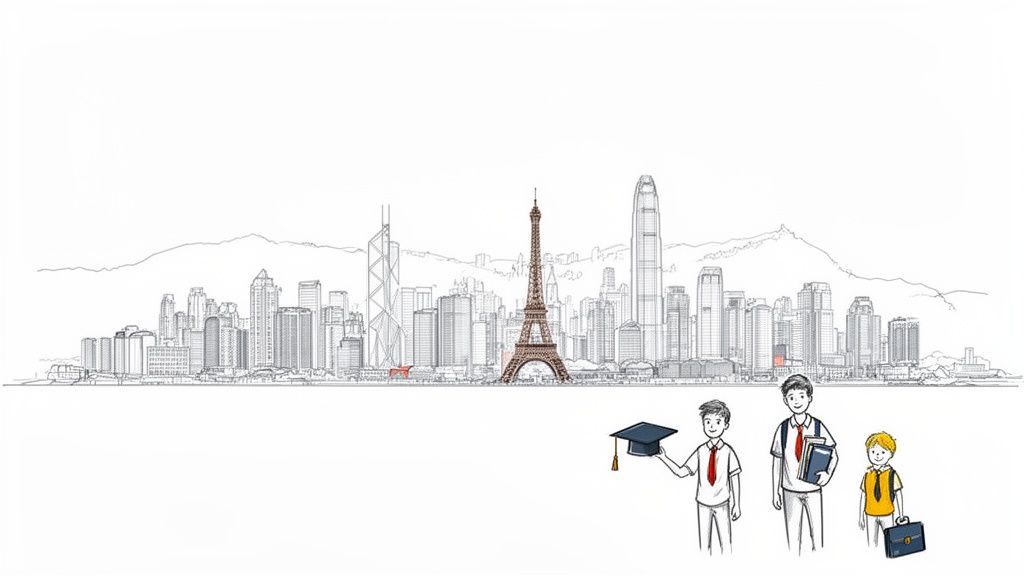
In Hong Kong, an international metropolis, English and Mandarin are basic skills, but French is the secret weapon that can make you stand out. It is not only an elegant language, but also a cultural asset that can instantly add a unique international perspective to your resume.
Why choose French tutoring?
For parents, choosing French as a second foreign language for their children is a far-sighted educational investment. With over 270 million French speakers worldwide, it is not only an official language of international organizations such as the United Nations and the European Union, but also occupies an important position in academic and cultural fields.
In Hong Kong's education system, the value of French is even more prominent:
Advantages of international schools : Many students studying the IB (International Baccalaureate) program choose French as their second language. Excellent French grades can directly boost the overall score and are key to getting into top universities.
A local stepping stone to higher education : The HKDSE also offers a French language course. Having an additional foreign language score can effectively enhance competitiveness for university admission.
Open up global educational opportunities : Obtaining internationally recognized certificates such as DELF B2 is equivalent to gaining admission to top universities in France, Switzerland, and Canada, opening up broader educational paths for your children.
For Hong Kong students, learning French is not only about acquiring another language, but also about opening the door to world-class education and multicultural experiences.
Workplace advantages for adult learners
For working professionals, enrolling in French language tutoring is also a wise move to enhance their professional value. As an international financial and commercial hub, Hong Kong has frequent trade and cultural exchanges with many French-speaking countries.
Being fluent in French can create unexpected advantages in the following industries:
In the finance and legal sectors : the ability to communicate directly with clients and partners from France, Switzerland, or Luxembourg in French, instantly building trust.
Luxury Goods & Hospitality : Many top luxury brands and hotel groups originate from France. Fluent French will help you gain a deeper understanding of the brand culture and provide more professional service.
In the arts and culture field , French is an indispensable communication tool, whether for curating, auctions, or cultural exchanges.
Whether for academic or career advancement, investing in French language tutoring is a high-return decision. It not only enriches your skills but also helps you build an irreplaceable personal brand in Hong Kong's fiercely competitive market. Plan your learning journey now with a free French proficiency assessment from the Hong Kong French Teachers Association .
Plan the most suitable French learning path for you at different stages of life.
Learning French is not a one-way street; different age groups have different learning paces and goals. Whether you are a parent opening the door to language for your children, a teenager facing the pressure of school entrance exams, or an adult hoping to improve yourself, a clear "learning map" is crucial.
Toddlers and children (3-9 years old): Immersed in fun, natural enlightenment.
This is the golden age for language learning. The focus is not on rote memorization of grammar, but on cultivating children's natural feel for French and a strong interest in it , so that they unconsciously regard French as a fun communication tool.
Successful enlightenment methods include:
Gamified learning : Through French nursery rhymes, storybooks, role-playing, etc., children can absorb vocabulary and sentence patterns while playing.
Thematic teaching : Courses are designed around topics that children are interested in, such as animals, colors, and food.
Engaging the senses : Combining activities such as singing, dancing, and drawing stimulates multi-sensory memory.
The key to success at this stage is "pressure-free." Led by native French speakers and taught in small classes (2-6 students per class), children receive ample attention and interaction while imitating authentic pronunciation. For more information, please refer to our "Complete Guide to Learning French for Children."
Teenagers (10-16 years old): From interests to skills, bridging academics and exams
As students enter adolescence, their comprehension abilities greatly improve, requiring a more systematic approach to French learning. The goal is to transform their cultivated interest into substantial academic skills, laying a solid foundation for mainstream public examinations in Hong Kong.
The focus of learning during this period should be closely integrated with the school curriculum:
Systematized grammar and vocabulary : systematically learn grammatical structures, verb conjugations, and expand vocabulary.
Targeted exam preparation : Specialized training in listening, speaking, reading, and writing, tailored to the exam formats of IGCSE , IB French , or HKDSE French subjects.
In-depth cultural exploration : By discussing French films, social issues, and other topics, we can enhance cultural literacy and critical thinking, which is especially important for the IB exams.
According to data from the French Cultural Association of Hong Kong, local students' demand for international certifications such as DELF continues to rise, reflecting the increasing importance of French in the local education system. For more information on these trends, please visit the official website of the French Cultural Association of Hong Kong .
Adults (17 years and older): Goal-oriented, pursuing flexibility and efficiency.
Adults learning French usually have specific goals, such as career advancement, immigration, or travel. Therefore, the curriculum must be highly personalized and flexible to suit their busy lifestyles.
The key to successful adult French tutoring lies in efficiency and practicality:
First, set clear goals : Communicate with the instructor before class to clarify whether your learning purpose is to prepare for business meetings, daily life, or exams such as the TCF.
Contextualized teaching is most effective : courses are designed around real-life scenarios, such as ordering food in a restaurant and writing business emails, so that students can apply what they have learned.
Make good use of spare time : Choose flexible courses with flexible times and locations (such as online classes or our multiple campuses in Central ), and use your commute time to listen to French podcasts.
Build confidence to speak up : A good mentor will create an environment that encourages speaking up and is not afraid of making mistakes, allowing you to practice.
How do I choose between small group classes and private tutoring?
To learn French well, the first step is to choose the learning method that best suits you. Small group classes create a lively atmosphere where students can motivate each other; while private tutoring can be completely tailored to your individual needs. Both have their advantages and disadvantages; the key is to choose the method that best suits your needs, learning style, and budget.
Small group teaching: lively interaction, progress together.
Small group teaching (such as our center's 2-6 person classes ) is currently the most popular model, especially suitable for beginners or those who enjoy group learning. In a small group, you can practice conversations with classmates of similar ability and encourage each other. This positive atmosphere of competition and cooperation makes the learning process more fun and less lonely.
However, the pace of small-class teaching is relatively fixed, and teachers need to take care of all students. If you learn very quickly or need more time to digest information, you may find the pace unsuitable.
Private tutoring: Goal-oriented, personalized guidance
If you're looking for the most flexible and targeted learning method, private one-on-one tutoring is undoubtedly the best choice. This is the most efficient way, especially suitable for students with clear goals, such as those preparing for the DELF exam, school interviews, or working professionals who need to significantly improve their French skills in a short period of time.
In private lessons, a native French teacher will focus all their attention on you. The course content can be completely tailored to your weaknesses, interests, and goals. For example, if you are confused about verb conjugation, the teacher can design different exercises throughout the lesson until you have fully mastered it. This kind of immediate feedback and intensive training is difficult to match in small groups.
Of course, the main consideration for private tutoring is price, which is usually higher than that of small group classes. At the same time, there is also a lack of opportunities to interact with classmates.
French tutoring models comparison: Small group classes vs. private tutoring
To help you compare them more clearly, the table below lists the main differences between the two modes:
Comparison Dimensions | Small class teaching (2-6 people) | Private one-on-one tutoring |
|---|---|---|
Learning atmosphere | Full of energy, with peer interaction and collaboration | Focused, personalized, and direct communication with mentors |
Teaching content | Standardized courses, following a fixed schedule | Completely tailored to individual weaknesses and goals |
Teacher's attention | Distribute to all students | 100% focused on a single student |
Progress and Flexibility | Fixed schedule, rigid timetable | The pace can be fast or slow, and the class schedule is highly flexible. |
Suitable partners | Beginners, children, and those who enjoy group learning | For test takers, working professionals, and those with specific goals. |
Learning efficiency | medium | Very high |
Cost Budget | More economical | Higher |
Social opportunities | You can meet new friends and build a learning community. | There are relatively few, mainly teacher-student interactions. |
In summary, if you prioritize interaction and value for money, small group classes are a good choice; if you value your time, have clear goals, and want the fastest results, private tutoring is worth the money.
How to choose the one that suits you best first?
For beginners with no prior experience : Small class sizes provide an easy starting point, allowing students to encourage each other.
Lively and active children : Interactive small classes allow them to learn happily through play.
Preparing for IGCSE or IB : Private tutoring can target weaknesses such as speaking or writing. You may consider our exam preparation courses at our Causeway Bay Centre .
For busy adults : Private French lessons can perfectly fit your schedule and work needs.
The final decision is yours. By carefully considering your goals, budget, and learning habits, you will naturally find the most suitable option.
Conquer the mainstream French exams in Hong Kong: DELF, IGCSE, IB, HKDSE
A strong French public exam score is definitely a plus for your academic application. To pass successfully, you must first understand the rules of each exam and then develop a personalized strategy.
DELF/DALF: An internationally recognized passport
DELF (Diplôme d'Études en Langue Française) and DALF are official diplomas issued by the French Ministry of Education and are valid for life , recognized worldwide. The exams are based on the Common European Framework of Reference for Languages (CEFR) and are divided into six levels (A1-C2), comprehensively testing listening, speaking, reading, and writing skills.
The importance of this certificate to Hong Kong students:
A ticket to French universities : A DELF B2 certificate can usually exempt you from the university's entrance language test.
Prove you "really know how to use" French : The exam content is practical and focuses on real-life communication skills, and is recognized by businesses and educational institutions worldwide.
Build confidence in learning step by step : The tiered system allows you to progress systematically and challenge yourself at each level.
The key to preparing for the DELF exam is "balance," meaning that all four skills—listening, speaking, reading, and writing—must be emphasized equally. During daily practice, you must set aside time for listening training and speaking practice.
IGCSE French: An essential step to international schools
IGCSE is an internationally recognized secondary school curriculum. The French subject aims to cultivate students' effective communication skills in various life situations. The exam is usually divided into three parts: listening, reading, and writing and speaking. The key to preparation is to be familiar with the question types and to accumulate a large vocabulary related to everyday life topics. The speaking test accounts for a significant portion of the score, and regular mock practice is crucial for achieving a high score.
IB French: Challenging Academic Depth and Critical Thinking
The IB French course not only requires language proficiency but also emphasizes cultural understanding and critical thinking. The course is offered at different levels:
French B (SL/HL) : Suitable for students with a certain foundation; Higher Level (HL) requires in-depth reading of original French literary works.
French Ab Initio : Designed for beginners with no prior knowledge.
Its assessment methods are comprehensive, especially the Individual Oral exam , which severely tests students' on-the-spot responsiveness and organizational skills. To conquer IB French, one must delve into the culture and social issues of French-speaking countries. For more information on targeted preparation, please refer to our French exam preparation courses .
HKDSE French: A Unique Choice of Local Courses
The French subject in the HKDSE can be your secret weapon in the DSE. The exam is prepared and graded by Cambridge Assessment International Education (CAIE), and its difficulty level is roughly equivalent to CEFR B1/B2 . For DSE candidates, the biggest challenge is effectively allocating study time under the pressure of heavy core subjects. Therefore, an efficient French tutoring plan is particularly important.
How to choose the French teacher who is right for you?
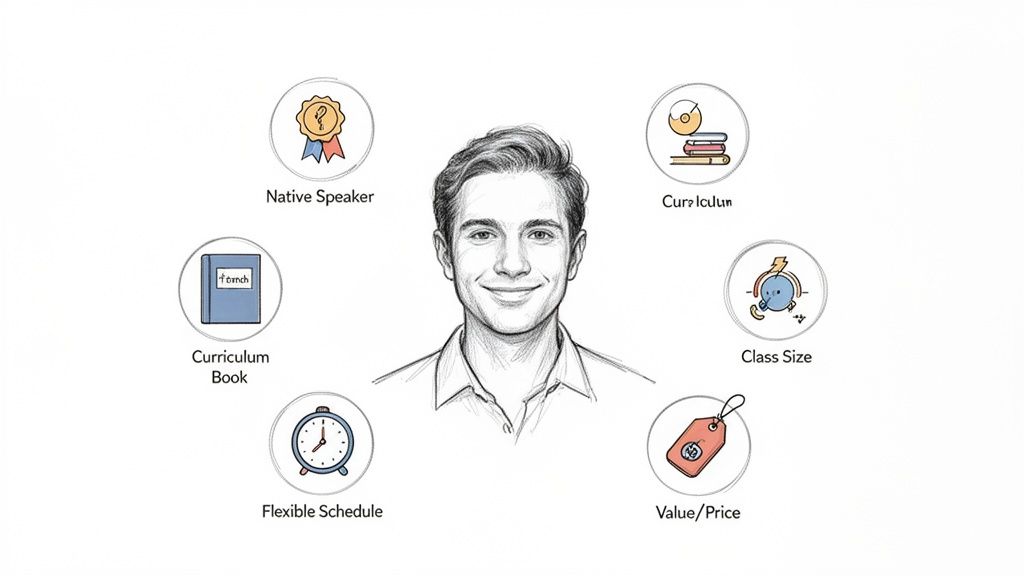
Choosing a French tutor is crucial; finding the right teacher or school can be incredibly helpful. A good choice can make all the difference, while a bad one can be discouraging. By focusing on these five key points, you can make an informed decision.
Teacher background and teaching experience
The quality of your teacher directly determines the authenticity of your French learning. First, consider whether your teacher is a native French speaker ; this ensures you're exposed to the most authentic pronunciation from the start. Second, teaching experience is equally important. Experienced teachers know how to break down complex grammar and create a relaxed classroom atmosphere that encourages students to speak. The Hong Kong Association of French Teachers insists that all instructors are experienced native French speakers.
Is the curriculum design systematic enough?
A good course should be designed in accordance with the internationally recognized CEFR (Common European Framework of Reference for Languages) so that you can clearly understand your learning progress. The course content should also be comprehensive, balancing training in the four areas of listening, speaking, reading, and writing, and avoiding an emphasis on memorization while neglecting actual communication.
Teaching Models and Interactivity
Small class sizes (2–6 students) strike a good balance, ensuring teacher attention while providing ample opportunities for student interaction. A good French tutoring class should be a safe practice space where you can build confidence in speaking French through interaction.
Location and time flexibility
For Hong Kong residents with their fast-paced lifestyles, convenience is paramount. When choosing a tutoring center, location should be a consideration. For example, the French Teachers' Association of Hong Kong has centers in Tsim Sha Tsui, Causeway Bay, and Central , making it convenient for students in different areas. Furthermore, online courses offer greater flexibility and are suitable for busy adults.
Tuition Fees and Cost-Effectiveness
Finally, don't just look at the price; consider the overall cost-effectiveness. Calculate the average cost per hour and combine it with factors such as teacher qualifications, curriculum design, and class size to determine if it's worth the money. Many institutions offer free trial classes or French proficiency assessments , allowing you to experience it firsthand before making a decision. For more tips on choosing a private tutor, please refer to our "Complete Guide to Private French Tutoring" .
Suitable for whom
Parents : They hope to provide their children (aged 3-16) with a high-quality second foreign language education to pave the way for future academic pursuits (IB, IGCSE, HKDSE) or personal development.
For test takers : Teenagers and college students who are preparing for international certifications such as DELF, TCF, and SAT French, or who are seeking targeted guidance for school exams.
Adults : Working professionals who wish to learn French for work purposes (finance, luxury goods, hospitality), interest, travel, or immigration.
Company : Provide professional French training for employees to improve the team's international communication skills and customer service level.
Frequently Asked Questions (FAQ)
1. I have absolutely no basic knowledge, will it be difficult to learn French? Many people think that French grammar is complicated and difficult to pronounce, but in fact many English words are derived from French (such as chef , déjà vu ), so you already have a certain foundation. As long as you follow a systematic approach, guided by native French teachers , and start from the basics, the learning process can be quite smooth.
2. How can you first practice an authentic French accent? The most effective way is to learn directly from a native French speaker. They can demonstrate standard pronunciation and correct your mistakes immediately, which cannot be replaced by self-study or watching videos. At the French Teachers Association of Hong Kong , our teachers pay special attention to pronunciation practice.
3. How long does it generally take to achieve fluent communication? This depends on your study frequency, after-class effort, and goals. According to the CEFR guidelines, it generally takes about 200 hours of study to reach level B1 (handling most everyday conversations); and about 500-600 hours to reach the "fluent" level of B2.
4. How much do French courses cost in Hong Kong? The price range is quite wide. Generally speaking, small group classes cost around HKD $250 to $500 per hour; private tutoring costs HKD $500 to $1000 or more. When choosing a course, you should consider factors such as teacher qualifications and class size to evaluate the cost-effectiveness.
5. Is learning French online effective? Online courses are very suitable for Hong Kong people with busy lives. A good online course depends on stable technology and the teacher’s interactive skills. The French Teachers Association of Hong Kong provides comprehensive online courses to ensure that the quality of learning is the same as in face-to-face classes.
6. At what age is it best for children to start learning French? The golden age for language learning is between 3 and 6 years old. Children at this stage are very sensitive to sounds and imitation, and can naturally absorb new languages through games and songs, cultivating a pure accent and a sense of language.
7. What is the difference between the DELF exam and IGCSE/IB? The DELF exam guide is an internationally recognized language proficiency test that is valid for life. IGCSE and IB, on the other hand, are academic exams linked to specific secondary school curricula, and the results are mainly used for university admission.
Ready to begin your French learning journey? The Hong Kong French Teachers Association offers professional courses led by native French speakers. Whether you are a child, teenager, or adult, we have options to suit you. Inquire or book a free French proficiency assessment via WhatsApp now, and let us plan the most effective learning path for you!
Comments