
Complete Guide to French Summer Courses in Hong Kong (2026): Course Fees, Exam Strategies, and Selection Tips

Summer vacation is the golden time to learn French. If you're thinking of enrolling yourself or your children in a French summer program but don't know where to start, the key to choosing a course is having clear learning goals. Whether it's for early childhood learning, preparing teenagers for DELF or IB exams, or adults pursuing hobbies or professional development, choosing a small-group course led by a native French speaker will allow you to achieve twice the results with half the effort in a short time and truly improve your French skills.
Key Summary
Objective-based: Before choosing a summer program, you must first clarify your learning objectives: whether it is to cultivate interest, prepare for exams (DELF, IGCSE, IB) or for practical application.
Key to quality teachers: We insist on choosing courses taught by native French speakers to ensure accurate pronunciation and the opportunity to learn authentic culture.
Small class teaching: The ideal number of students is 2-6 , ensuring that each student has ample opportunity to practice speaking and receive personalized guidance from the teacher.
Course Comparison: In-person courses are suitable for learners who need interaction and discipline; online courses offer great flexibility for students with tight schedules.
Registration timing: Pay attention to "early bird offers", which are usually launched after Easter. Registering early can enjoy tuition discounts.
How to choose the French summer school that’s right for you?
Summer vacation is precious, so choosing a French summer program that can both stimulate learning interest and help students achieve their goals is crucial. The courses available in Hong Kong are incredibly diverse, ranging from play-based preschool classes to intensive exam-preparation camps, so parents and students definitely need clear guidance.
The first thing to consider is the learner's age and motivation for learning French. A course designed for a three-year-old should be full of songs and sensory games; but if it's designed for teenagers preparing for IGCSE or IB exams, the focus will naturally be on grammar, writing, and test-taking skills. Therefore, blindly choosing a course or only looking at the price often only wastes valuable time and money.
Who is this guide for?
Parents: Looking for high-quality and fun French summer courses for their children aged 3-16.
Secondary school students: preparing for the DELF, IGCSE, IB French or HKDSE French public examinations, hoping to make the most of the summer vacation.
Adult learners: Those who want to quickly master practical French for work, travel, immigration, or personal interest.
Corporate clients: Providing professional business legal training for employees.
First, figure out your learning goals
In Hong Kong, people learn French for a variety of reasons, ranging from simply cultivating an interest to practical needs for further education or employment. Therefore, knowing your own goals is the first step in selecting a course.
For toddlers and children (3–9 years old): The main goal is to cultivate language sense and interest . The curriculum is best based on interactive games, stories, and songs, led by native French speakers , to build a good impression of French in a relaxed and enjoyable environment.
Adolescents (10–16 years old): The goals at this stage are usually linked to academics and exams , such as DELF, IGCSE, IB French, or HKDSE French. The curriculum needs to systematically teach grammar and provide sufficient oral practice and test preparation.
Adults (17 years and older): Their goals are more personalized, such as travel, work, immigration, or simply personal interest . Course selection should be flexible and able to meet specific needs, such as business French or intensive conversation courses.
The flowchart below can help you quickly find the right course direction for you based on different learning goals.
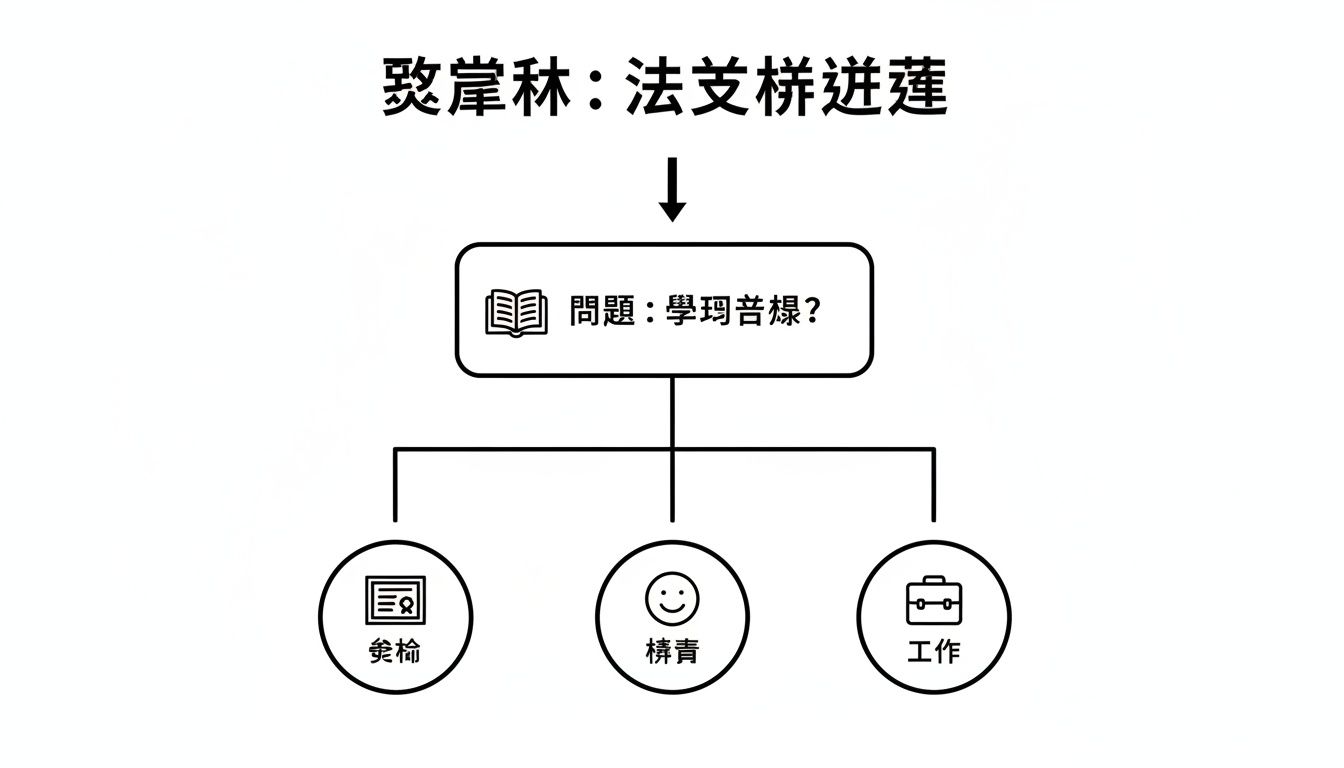
After reading the picture, you will find that no matter whether your goal is exams, interests or work, there are corresponding learning paths to choose from to help you make more informed decisions. Want to know more? WhatsApp us now to inquire or book a free French proficiency assessment !
Why is the demand for French summer schools in Hong Kong soaring?
In recent years, the demand for learning French in Hong Kong has increased significantly, especially for summer courses, which are very popular. As Hong Kong becomes increasingly integrated with the international community, mastering another language has become an important personal asset.
Statistics show that from 2015 to 2025, the number of French nationals in Hong Kong has increased by more than 150% . This trend has directly driven the registration rate for French courses to increase by more than **25%** every year. For example, during the summer vacations in recent years, French courses for children aged 3-9 have attracted a large number of students to enroll. Among them, school buildings in core areas such as Tsim Sha Tsui have extremely high class fill rates, which reflects parents' desire for high-quality French education. If you want to know more relevant data, you can read relevant reports here .
The two cornerstones of success: native language teachers and small class sizes
If you're considering enrolling your child or yourself in a French summer program, choosing the right teacher and learning environment is the first step to success. Our Hong Kong French Teachers Association insists that all courses be taught by native French speakers in small classes of 2-6 students. This commitment isn't arbitrary; it's based on years of experience and a deep understanding of how to help students learn most quickly and effectively. These two factors directly determine whether students can develop a natural French accent and speak with confidence in a short period.
Native French teachers: irreplaceable pronunciation and cultural guides
The most basic and effective way to learn any language is through imitation, especially in the early stages. If you learn the pronunciation rules, unique intonation, and special nasal sounds of French incorrectly at the beginning, it will be very difficult to correct them later.
The biggest advantage of native French speakers is that they can provide the most authentic and genuine language demonstration . From the very first lesson, students hear standard Parisian accents or natural intonations from other parts of France, rather than the rigid pronunciation from textbooks.
Authentic pronunciation and intonation: Every word and every sentence spoken by the teacher serves as the best model for students to imitate. This helps students establish a correct pronunciation system from the ground up and avoid speaking French with a Hong Kong accent.
Authentic Expression and Cultural Connotation: Language is not just about words and grammar; it's a culture. Native language teachers naturally incorporate everyday French expressions, idioms, and even body language into their teaching. For example, they explain subtle nuances in different contexts, or how a simple word can convey a complex emotion. These are cultural essences that books cannot fully impart.
Build communication confidence: In a French-only environment, students will be "forced" to step out of the comfort zone and try to express themselves with limited vocabulary. Mother-tongue teachers are good at encouraging and guiding students to understand that "it doesn't matter if they make mistakes, but the most important thing is to dare to speak first." This kind of positive encouragement can greatly enhance students' self-confidence. If you are interested, you can take a look at the professional backgrounds of all our native French teachers to learn how they bring their professional knowledge into the classroom.
Small class sizes: ensuring every student receives sufficient attention.
If native language teachers are high-quality "input," then small-class teaching is the guarantee of efficient "output." In traditional large classes of ten or twenty students, it is difficult for teachers to take care of each student's progress, and students have very few opportunities to practice speaking.
Our Hong Kong French Teachers Association insists on having 2-6 students per class precisely to solve this problem.
In a small class setting, the teacher doesn't just impart knowledge; they act as a personal language coach for each student. This close teacher-student relationship is crucial for building students' confidence and helping them overcome language barriers.
The benefits of small-class teaching are obvious:
Personalized attention: Teachers can clearly understand each student's strengths and weaknesses. For example, student A may have excellent pronunciation but weak grammar, while student B may be the opposite. Teachers can then adjust the teaching content in a timely manner and provide targeted guidance.
Ample oral practice: In a one-hour class, students in a class of 6 will have significantly more speaking time on average than in a class of 20. Extensive oral interaction is key to "internalizing" the language, especially in intensive courses like summer programs, where the effects are even more pronounced.
A safe learning environment: For introverted or younger learners, speaking a foreign language in front of others can be very stressful. Small class sizes create a familiar and safe environment where students can more easily build friendships and are more willing to try new things without fear of making mistakes.
Immediate correction and feedback: When students make mistakes, teachers can correct them immediately and gently, and explain the reasons for the errors. This immediate feedback can effectively prevent incorrect usage from becoming a bad habit that is difficult to correct.
In summary, the combination of native language teachers and small-group teaching creates a highly efficient learning cycle. The former ensures the "quality" of language input, while the latter guarantees the "quantity" of interactive output and the "precision" of personalized guidance. This is the core reason why a high-quality French summer program can bring significant progress to students in just a few weeks.
Summer courses tailored to different age groups
Learning French has never been about "reading a book until you are old". Different ages have completely different methods of absorbing knowledge and different learning goals. We, the French Teachers Association of Hong Kong, understand this very well, so we have designed a French summer school with a unique set of teaching methods for children aged three to adults to ensure that everyone learns most efficiently at a pace and atmosphere that is most suitable for them.
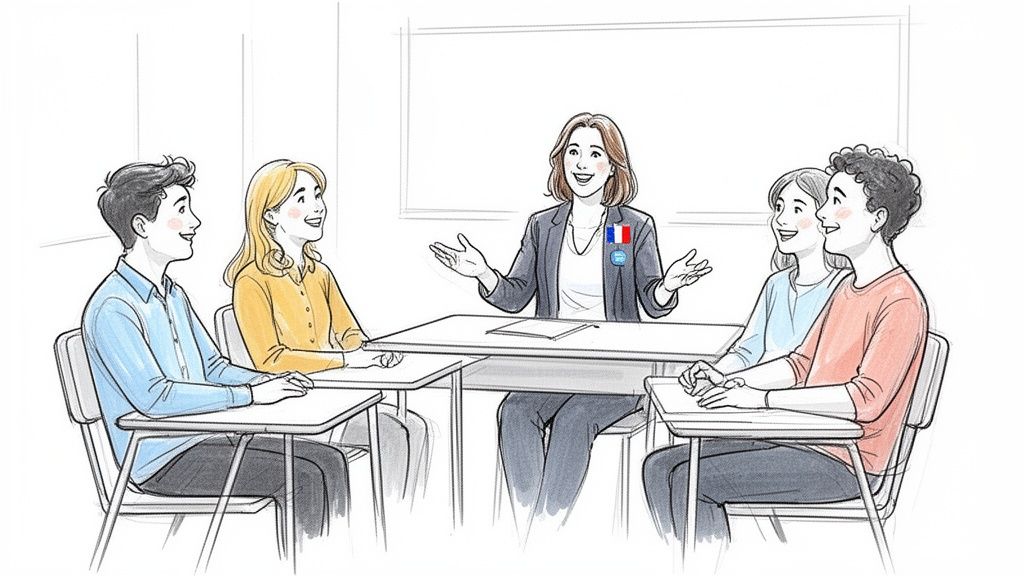
French language classes for toddlers (3-5 years old): Starting with games to build language sense.
For children aged 3 to 5 , the most important thing about learning is that it's "fun," rather than rote memorization. Children at this stage explore the world through their senses, so you won't see traditional textbooks or copying exercises in our classrooms.
What we do is create a fun, immersive French-speaking environment. Native French teachers lead children in singing, dancing, playing games, and doing crafts. For example, they learn the names of animals and fruits using brightly colored flashcards, or learn simple greetings like "Bonjour" and "Merci" through role-playing.
The core concept of our preschool class is "painless learning." The goal is to transform French into a fun sound and a playful game, leaving a happy impression on children and laying a solid foundation for more systematic learning in the future.
French language classes for children (ages 6-9): Learning to express oneself through interaction.
As children enter primary school, aged 6 to 9 , their comprehension and concentration abilities improve significantly. Our children's French course will begin to systematically teach some basic vocabulary and simple sentences, but the method will still prioritize interactivity and fun.
Teachers encourage students to speak boldly through storytelling, group discussions, and role-playing. For example, a common scenario is for students to role-play going to a bakery to buy baguettes, naturally learning numbers, food names, and how to shop. This "learning by doing" approach makes grammar and vocabulary more than just abstract symbols from books.
French Language Class for Teenagers (Ages 10-16): Strengthening Academic Foundations and Broadening Cultural Horizons
The learning goals for teenagers are usually very clear. Many students need to cope with schoolwork or prepare for public exams such as DELF, IGCSE , or IB French . Our summer French program for teenagers will have a more academic depth, aiming to comprehensively improve their listening, speaking, reading, and writing skills.
The course delves into grammatical structures, such as verb conjugation and the usage of different tenses, and also provides systematic writing training. However, simply practicing exams is insufficient. We also emphasize broadening students' international perspectives. Teachers guide students in discussions about French films, music, and social issues, enabling them to learn not only a language but also the culture behind it. This teaching model is particularly helpful for preparing for assessments that emphasize cultural analysis, such as the IB French exam.
French classes for adults (17 years and older): Goal-oriented, flexible learning.
Adults learn French for various reasons. It could be for work, travel, immigration preparation, or simply personal interest. Therefore, the biggest features of adult courses are flexibility and practicality .
Our course content is adjusted according to the students' goals. For example:
Business French: This course focuses on teaching how to write French emails, meeting phrases, and business etiquette.
French for Travel: The focus will be on practical conversations such as asking for directions, ordering food, shopping, and booking hotels.
For immigration or further education: the course will provide intensive training to meet the requirements of the TCF or DELF exams.
Whatever your goal, we can provide the most tailored learning solutions to ensure that the knowledge you learn in the classroom can be applied in real life.
Make good use of summer vacation to efficiently prepare for international exams.
For many Hong Kong students, summer vacation is not just a time to relax, but also a golden opportunity for academic enhancement. This is especially true for students preparing for international French exams, where every second counts. A professional French summer program can cleverly integrate intensive test-taking strategies into the curriculum, helping you consolidate knowledge, master skills, and build confidence in a short period of time, laying a solid foundation for important exams such as DELF, IGCSE, IB, or HKDSE.
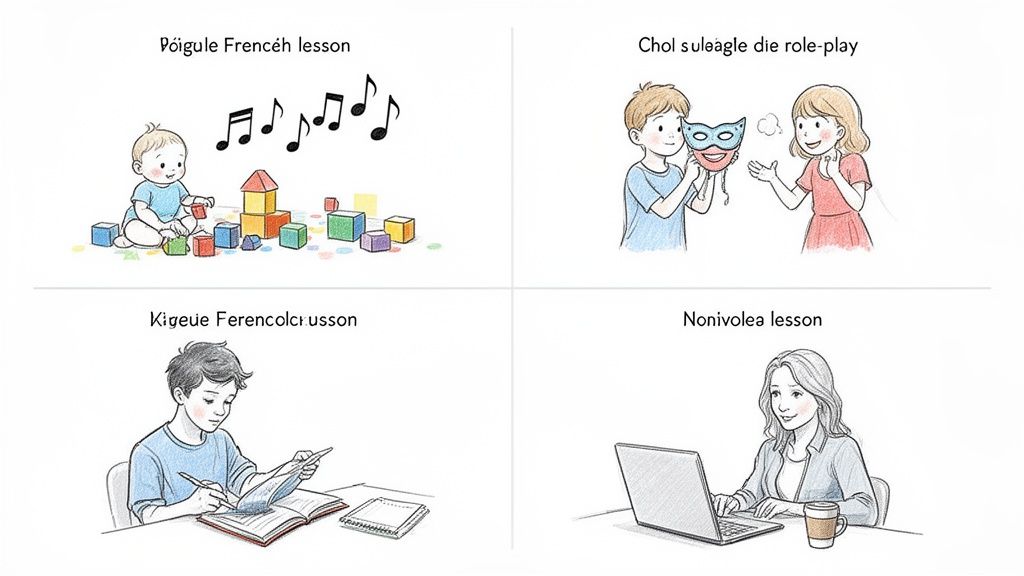
Why is summer the best time to prepare?
Everyone knows that with heavy schoolwork during the week, it's almost impossible to find a lot of time to specialize in a foreign language. Summer vacation is different; it provides a complete and undisturbed period of study time, allowing you to focus wholeheartedly and systematically review and strengthen your French skills.
This intensive learning model allows the brain to be continuously "immersed" in a French environment, which is very helpful in converting short-term memory into long-term knowledge. Rather than spreading learning out over several months, it is better to concentrate on learning during the summer vacation, which often yields twice the results with half the effort.
Tailor-made training for different exams
Different public exams have vastly different assessment criteria and question types, so targeted training is absolutely the key to success. At the French Teachers Association in Hong Kong , our summer program designs specialized teaching content based on the requirements of different exams, ensuring that every effort is put into effective learning.
DELF Exam Preparation: Our course comprehensively covers all four areas: listening, speaking, reading, and writing. Our teachers will familiarize you with the exam format and teach you effective time management through simulated exam speaking practice and analysis of past exam questions in writing guidance. To learn more about how our French exam preparation course can help you, please visit [website address].
IGCSE French Preparation: The course closely follows the IGCSE syllabus, focusing on strengthening your grammar application and vocabulary. We will conduct extensive reading comprehension and writing exercises to ensure you can handle various question types with ease.
In-depth analysis of IB French: The IB exams test not only language skills but also literary appreciation and cultural understanding. Our native language teachers will guide you in analyzing designated literary works, exploring French socio-cultural issues, and developing your critical thinking skills.
HKDSE French Exam Preparation Strategy: Targeting the DSE exam structure, we will focus on training oral interaction and writing skills, and arrange mock exams conducted by teachers familiar with the marking criteria to let you experience the exam atmosphere in advance.
To help everyone better understand how the courses are designed for different exams, we have prepared the following comparison table:
Summer course exam preparation key points comparison
Exam Types | Summer Camp Training Focus | Core skills | Suitable for students |
|---|---|---|---|
DELF (A1-B2) | It comprehensively covers all four sections: listening, speaking, reading, and writing, and includes a large number of mock test questions and oral exam practice. | Time management, immediate response, and argument organization | French learners at all levels aim to obtain internationally recognized certificates. |
IGCSE French | The curriculum focuses on strengthening grammar and vocabulary, and provides intensive practice in reading comprehension and writing. | Grammatical accuracy, text comprehension, and written expression | International school students or self-study students |
IB French (SL/HL) | In-depth analysis of literary works, exploration of cultural issues, and training in critical thinking and oral commentary. | Literary appreciation, critical analysis, and oral discourse | IB students need to prepare for Papers 1 & 2 and an oral exam. |
HKDSE French | Intensive training in oral interaction and writing, simulating DSE question types. | Interactive communication, viewpoint expression, and argumentative writing | Students taking the Hong Kong Diploma of Secondary Education Examination |
This form clearly demonstrates how our courses are precisely tailored to the unique needs of each candidate.
Let the data speak for itself: How significant are the results of the summer program?
In Hong Kong, the effectiveness of specialized French summer courses in improving exam scores is widely recognized. According to statistics from the Hong Kong University School of Professional and Continuing Education (HKU SPACE), between 2022 and 2025, the pass rate for students enrolled in the TCF International French Exam Summer Course remained consistently above 96.5% , with a remarkable 98.8% achieved in May of recent years. Furthermore, 75% of the students exceeded their target level by one grade!
For example, at our Hong Kong French Teachers Association , the pass rate for our summer French language program for teenagers in recent years has reached 92% , far exceeding the Hong Kong average of 75%. This is thanks to our commitment to professional pronunciation training by native speakers and frequent mock exams. You can view more relevant statistics here .
The true value of summer programs lies in their high degree of targeting and intensive nature. They not only impart knowledge, but more importantly, cultivate test-taking mindset and strategies, so that you enter the exam room full of confidence and well-prepared.
Our course consultants are happy to answer your questions about different exams and can arrange a free French proficiency assessment to help you plan the most effective summer study program.
Online or physical courses, which one to choose?
Technology has indeed changed many things, and learning is no exception. Faced with a wide variety of French summer programs , one of the most troublesome issues for parents and students is whether to choose traditional in-person classes or more flexible online courses.
Actually, there is no absolute right or wrong in this decision. The key is whether you understand the difference between the two and then make the most suitable choice based on your (or your child's) learning style, self-discipline, and summer schedule.
The unique value of in-person courses
The biggest selling point of traditional in-person classes is the irreplaceable real-time interaction and learning atmosphere. In the classroom, students can directly feel the teacher's body language and enthusiasm, and the eye contact and real-time discussions among classmates, that feeling of "learning together" can indeed stimulate stronger learning motivation.
Real-time interaction and feedback: Teachers can see students' reactions at a glance and correct their pronunciation and mouth shapes on the spot. This face-to-face guidance is particularly effective for beginners to master the unique pronunciation and intonation of French.
An immersive learning environment: The whole class plays role-playing games and conducts group discussions in French, which can greatly reduce the loneliness of studying alone and naturally make students more engaged and more willing to speak.
Greater focus: Leaving the tempting environment of home (TV, game console, bed, etc.) and coming to a center designed specifically for learning makes it easier to concentrate and fully engage in the class.
Of course, in-person classes have higher requirements for time and location. If you live far away or have a packed schedule of summer activities, it may be inconvenient to make time to travel long distances to attend classes.
The flexibility and convenience of online courses
On the other hand, online French classes have become a popular choice for many people due to their unparalleled flexibility. In particular, online learning is extremely convenient for adults with busy schedules or students who want to make good use of their spare time.
The true value of online learning lies not only in breaking geographical limitations, but more importantly, in returning control of the learning pace to the learner themselves. As long as there is internet access, anywhere can be your French classroom.
Our Hong Kong French Teachers Association is committed to integrating technology into teaching to ensure that the quality of online courses is on par with that of in-person classes. We utilize tools such as interactive whiteboards, breakout rooms, and real-time voting to strive to recreate the interactivity of the classroom.
In addition, online courses have several unique advantages:
Ultimate flexibility: No more time spent commuting; classes can be held from home, saving valuable time and energy.
Class recording replay: All online classes are recorded, and students can review them anytime, anywhere, an unlimited number of times. This feature is very useful for reviewing more complex grammar points or catching up on content that was accidentally missed.
Access to top-notch teachers: No matter where you live, you can take classes with our team of the best native French language teachers, no longer limited by location.
Want to learn more about how to use online resources to learn French effectively? Check out our ** Practical Guide to Learning French Online **, which contains more useful tips and suggestions.
Ultimately, the choice between in-person and online learning really depends on individual needs. You can ask yourself a few questions: Are you self-disciplined? Do you enjoy face-to-face communication with classmates? Is your schedule very full? Regardless of your answers, the Hong Kong French Teachers Association has the most suitable program for you to help you effectively improve your French skills during the summer vacation.
Summer Camp Fees and Registration Information
When enrolling your child or yourself in a French summer program, tuition fees are naturally a key consideration. Frankly, course costs vary widely, depending mainly on the length of the course, class size, teacher background, and type of course. For example, intensive courses specifically designed for exam preparation will naturally cost more than regular interest classes.
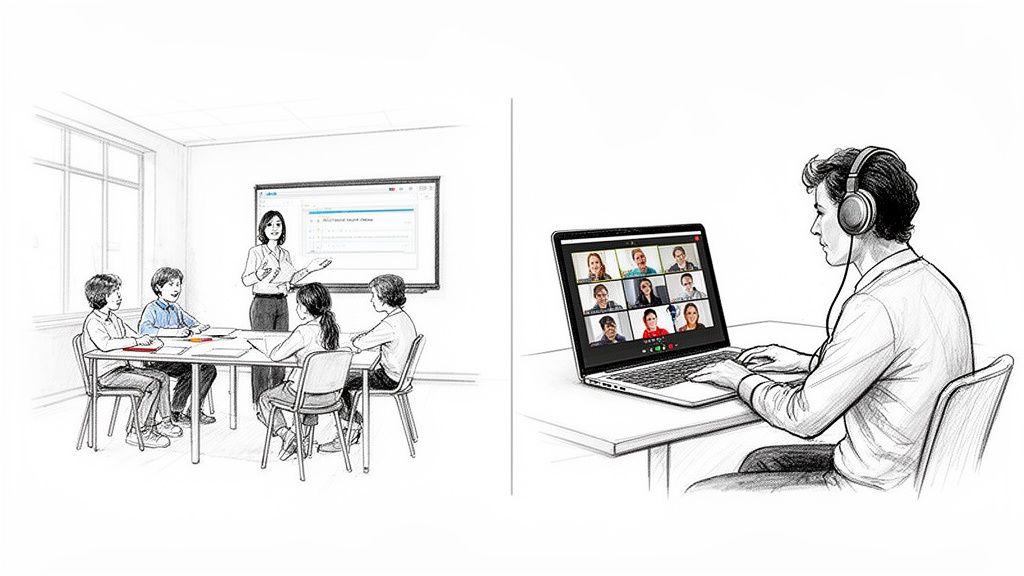
Choosing a high-quality French course is definitely a worthwhile investment in the long run, especially during the golden age of language learning. Small class teaching led by native French speakers may be slightly more expensive, but it provides students with ample attention and plenty of opportunities to practice speaking. This learning outcome is incomparable to that of large classes with a dozen or more students.
Where exactly does the tuition go?
Want to know exactly where your tuition fees go? The fee structure is actually quite transparent, mainly due to the following factors:
Faculty Quality: We insist that our teachers must be native French speakers with professional qualifications and extensive teaching experience. They are the core guarantee of teaching quality, and the tuition fees will reasonably reflect their professional value.
Class Size: The Hong Kong French Teachers Association has always insisted on small class sizes of 2-6 students . We believe this is the optimal teacher-student ratio, ensuring that every student receives sufficient attention. Naturally, the teaching costs are different compared to large classes with a dozen or even twenty students.
Course hours and intensity: Summer programs are typically designed to be more intensive than regular courses. The more total class hours, or the more frequent the classes per week, the higher the cost will be.
Course content: If the course is designed for public exams such as the DELF exam, the fee will be slightly higher than that of a general hobby class because additional materials, mock exams and other resources are required. This is to be expected.
Register early for greater benefits!
Summer program slots are always in high demand, so planning ahead not only helps you secure your preferred time slot, but often also offers tuition discounts! Most schools, including our campus in Causeway Bay , usually offer "early bird discounts" after Easter, meaning the earlier you register, the bigger the discount.
Here's a tip: Before officially registering, it's best to chat with our course consultant or even get a free French proficiency assessment. This will ensure that the level you choose perfectly matches your actual needs, avoiding wasting money and time due to a mismatch.
The general registration process is actually very simple:
Inquiries and consultations: You can inquire about course details at any time by phone, WhatsApp or by visiting our school.
Level Assessment: We will arrange a free assessment for you to help you find the most suitable class.
Fill out the registration form: After selecting your preferred class time, fill out the simple registration form.
Tuition payment: You can pay via bank transfer, Faster Payment System (FPS) or credit card, and your place will be secured.
Regarding leave and make-up classes, since the summer program is quite intensive and interconnected, we generally advise students to try their best not to miss classes. Of course, if there are any special circumstances, please be sure to notify us in advance, and we will try our best to arrange make-up classes or provide class recordings, depending on the situation.
Want to know the latest early bird offers? WhatsApp us now to inquire and take the perfect first step on your French learning journey!
Frequently Asked Questions (FAQ)
Q1: Children have no basic knowledge, will they be unable to keep up?
Absolutely nothing to worry about! We have an introductory class specifically for beginners with no basic knowledge. The course starts with French letters, basic pronunciation and simple greetings. The teachers are all native French speakers and will use a large number of games and interactive activities to guide children in a happy environment to ensure that they can easily get started and build interest in learning.
Q2: Would it be embarrassing for an adult to learn French if he didn’t know it at all?
Not at all. Our adult French courses will first conduct a free level assessment to ensure that the level of classmates is similar. The teacher will start with the most basic pronunciation and grammar teaching, and practice with real-life scenarios. In addition, small class teaching of 2-6 people can take care of each student's progress, and the learning atmosphere is very harmonious.
Q3: Will the French summer school be as hard as tutoring?
Please rest assured that our teaching philosophy is "learning and entertainment". Especially for children and adolescents, the class will be interspersed with many games, singing and group activities, creating a relaxed atmosphere. Our goal is to stimulate interest in learning, not to improve grades. Even in exam classes, diversified teaching methods will be used to avoid boredom.
Q4: I'm going on a trip during the summer vacation, can I take leave?
We understand that families will have travel arrangements during the summer vacation. As long as you notify us in advance, the course consultant will try his best to help you arrange class adjustments or provide class recordings so that you can follow the progress when you return. The most important thing is to maintain communication and we will try our best to cooperate.
Q5: How much progress can I expect after completing a summer program?
Progress varies from person to person, depending on attendance and personal commitment. However, based on past experience, most students’ confidence in speaking French and their listening comprehension skills will significantly improve after intensive study. For students preparing for the DELF exam, summer classes can help them focus on consolidating their knowledge and prepare themselves for the exam.
Q6: Do you have to choose a native-speaking teacher?
Because the pronunciation, intonation and rhythm of French are so unique, students can first learn the purest and most authentic accent through personal demonstration by native teachers who are accustomed to listening to French, and avoid "Hong Kong-style French" that is difficult to correct in the future. Moreover, native-speaking teachers can integrate life culture into teaching to make learning more three-dimensional.
Q7: I want to continue studying after the summer vacation. How can I connect?
Many students want to continue studying after taking summer classes. After the course, the teacher will provide each student with a learning evaluation and suggestions. You can seamlessly connect to our regular classes of corresponding levels and continue to learn systematically. Our course consultants will help you handle all articulation arrangements.
At the French Teachers Association of Hong Kong , we are committed to providing every student with the most professional and attentive French instruction. Please feel free to contact us if you have any further questions.
Comments