
Which school is best for learning French? 2026 Hong Kong French Course Fees and School Selection Guide

Want to know "How good is it to learn French"? The most direct answer is: give priority to professional language schools that are taught by native French teachers , use small class teaching (2-6 people), and have courses that adhere to the internationally recognized CEFR framework . These three major standards are the cornerstone to ensure teaching quality and learning effectiveness, and can help you make steady progress whether you are interested in taking exams.
Key Summary
Teachers are the key : choosing a native French teacher (Native Speaker) can ensure that you learn the most authentic pronunciation and cultural context.
Class size : Small class teaching (2-6 people) ensures that each student has enough opportunities to interact and ask questions, making learning more efficient.
Curriculum framework : Systematic courses (such as following the CEFR framework) are crucial to laying a solid foundation and preparing for public examinations (such as DELF, IGCSE).
Goal-based : Different ages and goals (children’s interests, DSE/IB exams, adult further education) require completely different curriculum designs.
HKDSE Changes : Starting in 2025, the DSE French subject will directly use DELF results, and candidates need to plan ahead.
How to evaluate French schools in Hong Kong: Four core standards
If you want to find the best French course for you among the many choices in Hong Kong, you can evaluate it from four core perspectives: teachers, class size, course structure, and learning flexibility. In order to make it easier for everyone to see at a glance, we have compiled a quick comparison table.
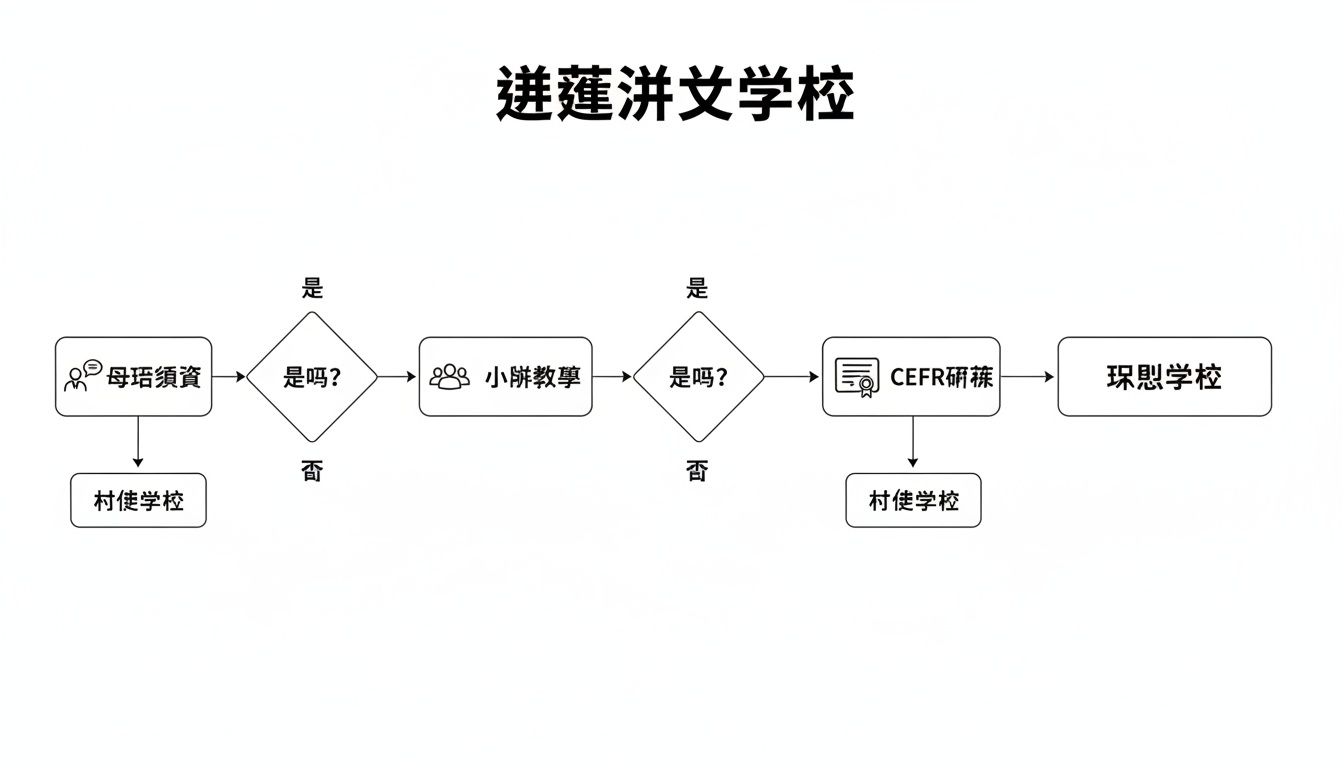
French school selection core criteria quick comparison
This table clearly compares different types of French schools in terms of teachers, class sizes, curriculum focus, and flexibility to help you quickly select them.
Evaluation criteria | Professional language schools (such as the Hong Kong Association of French Teachers) | Large chain tutoring centers | University Continuing Education College | Private tutoring |
|---|---|---|---|---|
Teacher background | Strictly selected native French teachers with professional teaching certification | The teachers have diverse backgrounds and may not be native language teachers. | Most are part-time lecturers with academic backgrounds. | The quality varies; you must judge for yourself among those in the same examination hall. |
Class size | Small class sizes (2-6 students) with ample interaction. | Large class teaching is the main method, making it difficult to ask questions. | With a large number of students in the class, opportunities for interaction are limited. | One-on-one, the most personalized |
Course Highlights | Focus on communication skills and exam preparation (DELF, IB, IGCSE) | Emphasis on test-taking skills or basic introduction | Highly academic, with a fixed schedule | Completely customized, but may lack a systematic approach. |
Learning flexibility | Offers different time slots and online/in-person options | Class times are fixed, and there are fewer options. | Semester system, low time flexibility | The time is the most flexible, and can be coordinated at any time. |
When choosing a French school, it’s not just about comparing prices. More importantly, you need to see whether the teaching method can stimulate your interest in learning and help you build long-term language skills. Especially for students who want to take public examinations, a systematic curriculum and professional guidance are absolutely the key to success.
In Hong Kong, if you want to learn French well, finding a professional institution taught by native French teachers is the most effective way. Taking the French Teachers Association of Hong Kong as an example, we focus on providing students with systematic training for examinations such as HKDSE, DELF, IGCSE and IB. According to the official report of the Hong Kong Examinations and Assessment Authority , many DSE French candidates start from scratch to lay a solid foundation, such as taking French courses for young children to accumulate enough hours to cope with the exam.
Who is this course suitable for?
Parents : To pave the way for the language development of their children (3-9 years old), look for interest-based enlightenment courses.
Candidates : primary and secondary school students preparing for public examinations such as HKDSE, IB, IGCSE, A-Levels or DELF.
Adults : Working adults or college students who want to learn French for career, travel or personal interest.
Enterprise : Provide professional business French training for employees.
Want to know which edge farming course is best for you? Contact us now to schedule a free French proficiency assessment, and our professional consultants will plan the best learning path for you!
Different French course plans for different students
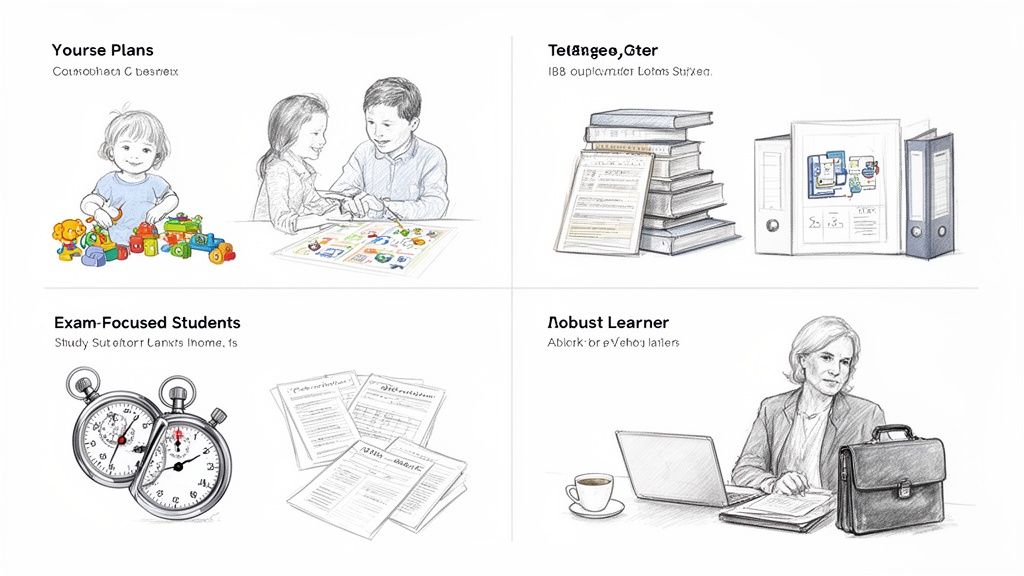
The core question of "Where is the best place to learn French?" is: Is the course design consistent with your goals? Students of different ages and needs may require very different teaching methods and course focus.
Toddlers and children (3–9 years old): Interest-based learning, play-based learning
For children of this age, the primary goal of learning is definitely to stimulate interest and build a sense of language , rather than memorize by rote. When parents choose courses, they must give priority to institutions that integrate French into games, children's songs and stories.
Teaching methods : Emphasis is placed on interaction and sensory experience, such as learning French through role-playing, hands-on activities, and music activities.
Learning environment : Colorful and interesting classrooms naturally make children relaxed and more willing to talk.
Teacher quality : Teachers must have the patience and skill to guide children to imitate authentic pronunciation without forcing them to follow.
For young children, learning itself should be a happy exploration process. A teacher who understands game-based teaching can lay a solid language foundation for children far better than a teacher who can only read from a book. The Hong Kong French Teachers Association’s children’s French course adopts this interest-based teaching model.
Teenagers (10–16 years old): Seamlessly connect to international exams
When children enter adolescence, learning French is often linked to school grades, especially international exams such as IB, IGCSE or A-levels . When choosing courses at this time, the focus should be on whether they can be connected with on-campus courses and help them build confidence in taking exams.
You should look for a program that provides systematic grammar instruction, expands academic vocabulary, and provides exam-oriented training. For example, the French Teachers Association of Hong Kong offers courses specifically for IGCSE French and other examinations to help students consolidate their knowledge and master test-taking skills.
For test takers (DELF, HKDSE): Strategy is key, efficiency is crucial.
If you have clear goals and want to cope with public examinations such as DELF or HKDSE , efficiency and strategy are the keys to success. When choosing a course, pay special attention to the following points:
Test-taking skills : Does the course cover test-taking strategies and time management skills in the four parts of listening, speaking, reading and writing?
Mock exam : Are there regular mock exams and targeted comments to help you identify your weaknesses?
Native-speaking teachers : French teachers will guide you in speaking and writing to ensure that your expressions are authentic and accurate, making it easier to score high marks.
Adult learners: Balancing practicality and personal interests
The motivations for adults to learn French are very diverse. They may be for work, traveling, or purely personal interests. Group classes allow you to interact with other students, and the learning atmosphere is more relaxed; while private lessons can be completely customized according to your progress and goals.
If you're studying for career development, one-on-one lessons can focus on your industry lingo. But if you are studying out of interest, you may wish to consider joining a group class at our Causeway Bay campus to meet a group of like-minded friends and explore French culture together.
A comprehensive guide to major French language exams in Hong Kong (HKDSE, DELF, IB).
Learning French in Hong Kong is often linked to further education or career development. Understanding several mainstream French public exams is the key to taking the first step. Whether you are preparing for HKDSE at a local university, IB or IGCSE for overseas studies, choosing the right exam path is very important.
DELF/DALF: a globally accepted proficiency certificate
DELF (Diplôme d'Études en Langue Française) and DALF (Diplôme Approfondi de Langue Française) are official diplomas issued by the French Ministry of Education. They are globally recognized and the certificates are permanently valid .
The exam is completely based on the Common European Framework of Reference for Languages (CEFR) grading, from A1 to C2. Candidates can apply according to their own level, and if they pass the exam, they will receive a certificate of that level, which provides a clear ladder of progress.
DELF's biggest advantage is its international versatility. Whether applying for a French university, working as a certificate, or determining personal achievements, this certificate is very important. It comprehensively assesses the four abilities of listening, speaking, reading and writing, with special emphasis on practical communication applications.
Major Changes to the HKDSE French and DELF Programs
For students in local mainstream schools, the French subject of HKDSE (Category C Other Language Subjects) is the top priority. In the past, HKDSE French and Liberal Arts subjects have always used Cambridge AS level examination papers.
But a key change is coming: starting from the HKDSE exam in 2025, French arts subjects will directly use DELF A2 or B1 scores as the scoring standard . This means that DSE candidates must have successfully obtained the relevant DELF certificate before taking the DSE exam.
According to the HKEAA data, French candidates generally performed well in the past. This is actually because most candidates have received 120 to 270 hours of professional training. The French Examination Preparation Course of the French Teachers Association of Hong Kong is designed for this purpose, ensuring that students have enough time and skills to achieve the target level. For more official guidance, please refer to the detailed instructions from relevant agencies .
IGCSE French and IB French: international course options
If you study in an international school, IGCSE French and IB French are the exams you must face on your way to higher education.
IGCSE French : Usually taken in grades 10 and 11, it focuses on establishing a solid language foundation and laying a solid foundation for learning IB French.
IB French : Divided into Standard Level (SL) and Higher Level (HL), with much higher academic requirements. It not only assesses language skills but also requires literary appreciation and critical thinking.
Both exams require solid grammatical knowledge and extensive vocabulary. Therefore, it is important to choose an exam preparation course that is familiar with the international curriculum system and guided by native French teachers .
Deconstructing the Cost and Actual Value of French Courses
In addition to "it's easy", how much does it cost to learn French is definitely the question that everyone is most concerned about. There are various fees for French courses in Hong Kong, but simply "fighting" means little. Whether an investment is worth it ultimately depends on whether it can help you effectively achieve your learning goals.
The price is mainly affected by three major factors: teachers, class size and class location. Generally speaking, courses taught by native French teachers and using **small class teaching (2-6 people)** can ensure that each student gets enough attention, so the cost is naturally higher, but the learning benefits are also the greatest.
Evaluating the cost-effectiveness of different courses
If you want to know whether a course is "value for money", you can't just look at the price tag, but also measure the long-term benefits it brings.
Group classes : The most common option on the market. For beginners or adults who want to learn in a relaxed and interactive environment, it is a good way to balance cost and learning atmosphere.
One-on-one private lessons : The unit price is the highest, but the effect is the most direct and targeted. If you have specific goals (such as preparing for a French interview, improving speaking weaknesses), private lessons are more efficient than group classes.
Exam intensive class : completely tailor-made for DELF, IGCSE or IB candidates. The value lies in precise test-taking strategies and intensive practical training, with the goal of helping you master scoring skills in a short period of time.
The real value lies in whether the quality of teaching can be transformed into your actual ability. A high-quality French course for children may open the door for children to enter their favorite school; an efficient adult course may bring opportunities for career advancement.
Taking the French Teachers Association of Hong Kong as an example, we insist on hiring only native French-speaking teachers and adopt a small class teaching model to ensure the quality of teaching. Although this model is more expensive, it can ensure that students receive the purest language training and sufficient practice opportunities, truly transforming tuition fees into real language skills. If you want to know more about the charging levels in the market, you can refer to the French course price guide we compiled.
Analysis of the advantages and disadvantages of in-person classes versus online courses
In the digital age, parents and students often ask: Should we choose traditional physical French classes or more flexible online courses? In fact, there is no absolute answer. The key lies in which mode best suits your learning style, life rhythm and goals.
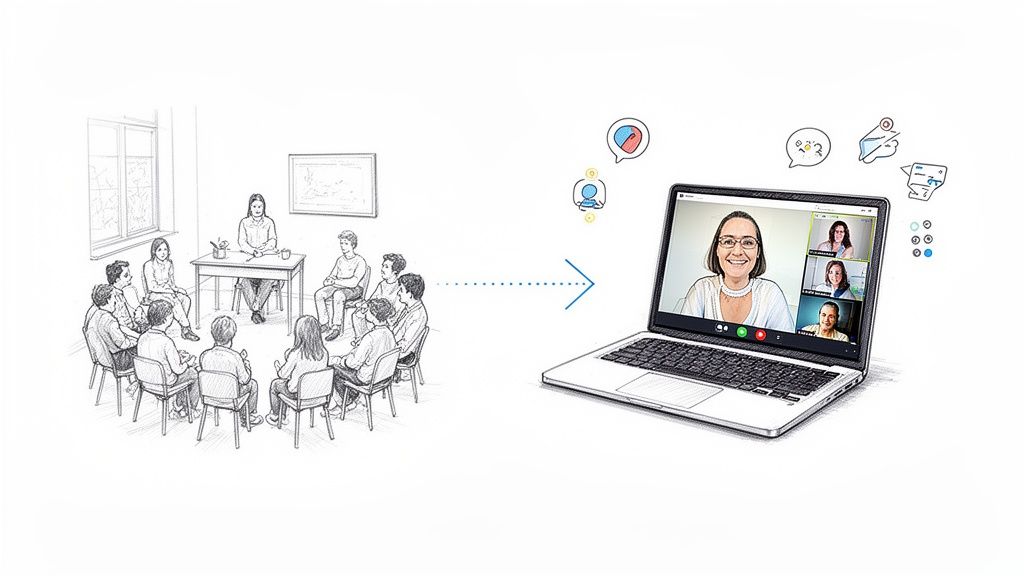
Comparison of in-person and online courses
The charm of physical classrooms lies in the immersive learning environment and real-time interaction . In the classroom, you can directly observe the teacher's body language and pronunciation, and practice conversations with your classmates in real time. On the other hand, online courses offer unparalleled flexibility. To give you more clarity when making your decision, we have put together a comparison table.
In-person French lessons vs. online French lessons
Comparison Dimensions | In-person classes (face-to-face instruction) | Online courses (remote) |
|---|---|---|
Learning Interaction | The interaction is immediate and direct, and you can observe the micro-expressions and body language of teachers and classmates, giving you the strongest sense of presence. | The interaction is affected by network stability, but the advantage is that it allows you to record and review the class content. |
Time flexibility | Having fixed class times and locations helps establish regular learning habits. | It is extremely flexible and can be attended at home or anywhere, saving transportation time. |
Learning environment | Providing a professional language learning environment reduces home distractions and makes it easier to concentrate. | Self-discipline is required to create a distraction-free learning space, which requires high concentration. |
Costs | Tuition fees usually include textbooks and facility usage fees, but transportation costs need to be considered separately. | Tuition fees are generally more affordable, saving on transportation costs, but you need to prepare a stable internet connection and computer equipment yourself. |
Suitable for | Toddlers, children, beginners in speaking, and learners who like to interact directly with people. | Adults with busy schedules, students living in remote areas, and exam preparers who need a high degree of study flexibility. |
In fact, the best choices are often not black and white. "Hybrid mode" may be the most efficient solution. For example, you can choose convenient online courses to consolidate grammar and vocabulary on weekdays, and then attend physical speaking workshops at our Tsim Sha Tsui campus on weekends to enjoy face-to-face communication.
The French Teachers Association of Hong Kong provides both high-quality physical courses and online French courses . No matter which model you choose, we insist on small class teaching by native French teachers to ensure that each student gets the best learning experience.
Frequently Asked Questions (FAQ)
We have compiled some of the most frequently asked questions by parents and students and will answer them for you in the most authentic Hong Kong way.
1. I have absolutely no prior knowledge, should I enroll in a private class or a small group class?
If you are new to French, we usually recommend starting with a group class . When you study with classmates, not only can you gain courage through interactive exercises, but the tuition is usually the same as one-on-one. When you have a basic foundation and want to improve a certain aspect (such as interviews), it will be more effective to consider private classes at that time.
2. At what age is it best for children to start learning French?
Many linguists say that the age of 3 to 5 is the golden period for language learning. Children at this age are like sponges, able to absorb and imitate authentic pronunciation naturally. A good early childhood curriculum will use games and singing to teach, allowing them to "play and learn", thus getting twice the result with half the effort.
3. How long do I need to learn before I can travel to France and communicate at a basic level?
If you want to have an idea, you can refer to the CEFR framework. Generally speaking, completing the A1 level course (about 80 to 100 hours of classroom learning) is enough to handle basic travel scenarios such as greetings, ordering food, and asking for directions. If you attend class for 2-3 hours a week, you will usually reach this level in about 4 to 6 months .
4. Do you have to choose a native French teacher?
The benefits of choosing a French native speaker are straightforward: 1) Authentic pronunciation : Learn the purest accent from the first day, and don’t have to change it later. 2) Cultural context : The teacher will naturally integrate the real French culture into the classroom and learn "living" French. 3) Daily expressions : You will learn many authentic expressions beyond the textbooks, and speak French more naturally.
5. What are the differences between the DELF and TCF exams?
Both are official tests, but their uses are very different. DELF is a permanently valid "degree certificate" with different levels (A1, A2, B1, etc.) for you to take. It is suitable for people who want to prove their French proficiency in the long term. It is also the new standard for HKDSE French from 2025. TCF is like a test that assesses your "current" level. The scores are only valid for two years and are usually used for time-limited applications such as French universities or immigration.
Are you ready to start your French learning journey? Whether you are paving the way for your children's future or adding value to yourself, the French Teachers Association of Hong Kong has a course that suits you. Contact us now to schedule a free French proficiency assessment , and our native French teachers will tailor a learning blueprint for you.
Comments