
French Language Courses in Hong Kong: How to Choose the Best French Class for You?
Looking for the perfect French language course in Hong Kong? Whether it's building a strong language foundation for your children, preparing them for public exams, or enhancing your career, the key is to first clarify your learning goals and then choose the appropriate French school. A high-quality school typically meets three criteria: instruction by native French speakers , small class sizes, and adherence to the internationally recognized CEFR language standards to ensure effective learning.
The main points of this article
Goal-oriented : First clarify whether you are learning French for interest, exams (DELF, IGCSE, IB), work, or your children's education, and then decide on the course direction.
Age-appropriate teaching : The learning methods for different age groups (preschoolers, children, teenagers, and adults) are completely different, so targeted curriculum design is required.
Key factors for teacher quality : Choosing native French speakers and small class sizes (2-6 people) ensures accurate pronunciation and sufficient individual guidance.
Exam strategies : Understanding the differences between the major French exams in Hong Kong (DELF/DALF, IB French, IGCSE French, HKDSE French) can help in planning your learning path.
Fees and Value : "Value for money" is not just about price, but also about learning efficiency. High-quality teachers and teaching methods can save you from wasting time and effort.
Before learning French, ask yourself: "Why am I learning it?"
In Hong Kong, the reasons for learning French are varied. Parents want their children to have a head start; students strive to pass the IB, IGCSE, or DSE exams; and adults often do so for interest or career development. Each different motivation corresponds to a completely different curriculum design and teaching focus.
Therefore, before comparing whether learning French is "better" or "worse," you should first ask yourself: "What are my learning goals?"
Having clear goals will help you select the most suitable option from the many French courses available in Hong Kong . For example, if your goal is to pass exams, you'll need a well-structured course that focuses on test-taking skills; if you simply want to communicate easily while traveling, a practical French class that emphasizes conversation and has a relaxed atmosphere would be more suitable.
Clarify your learning direction
For exams : Are you aiming to obtain a DELF, IB French, or HKDSE French certificate? You need a targeted exam preparation course.
For those interested in enjoying French films without subtitles or experiencing French culture firsthand, courses that emphasize cultural exchange and communication will be more engaging.
For your career : Do you need to communicate with French clients at work? Business French or private French tutoring would be the most efficient choice.
For your children : Want them to be exposed to a multilingual environment from a young age? Gamified French language courses for children are the best starting point.
The decision-making flowchart below shows how to select the most suitable French course for you step by step based on your learning goals, preferred teaching methods, and teacher background.
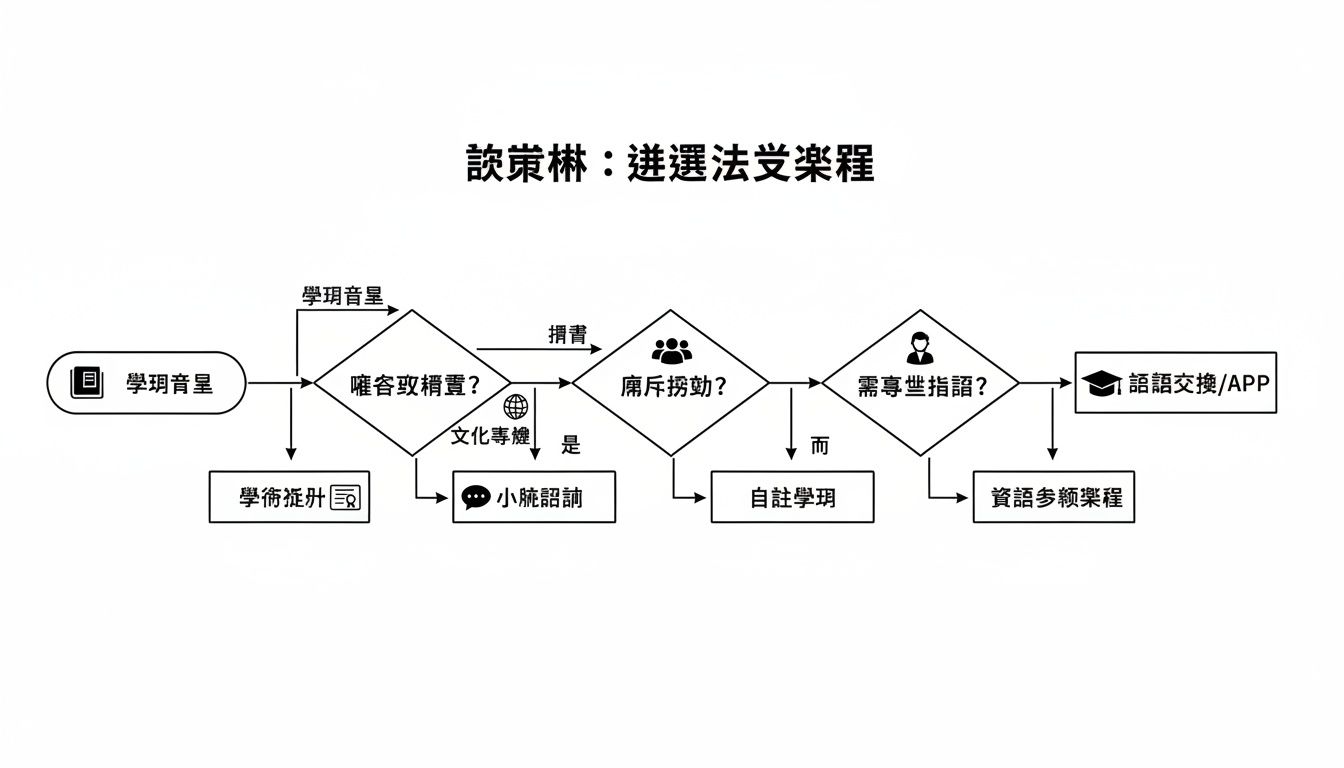
The diagram clearly shows that the final choice of which course you choose depends entirely on whether your personal needs match the characteristics of the course.
In fact, there has always been a huge demand for standardized French education in Hong Kong. Take the Alliance Française de Hong Kong, the official French certification body, as an example. Since its establishment in 1953 , it has attracted more than 6,000 students to apply every year. Its curriculum system fully refers to the Common European Framework of Reference for Languages (CEFR), which also reflects the market's emphasis on standardized teaching. For more information on official institutions, please refer to the introduction of the Consulate General of France in Hong Kong and Macao .
Want to know which course is right for you? Contact us now for a free French proficiency assessment!
Who is it for? How our French courses can meet your needs?
Parents : We provide a complete learning path for children aged 3-16, from interest-based learning to academic preparation.
For test takers : We offer test-taking strategy courses taught by experienced mother tongue teachers for exams such as DELF, IB, IGCSE and HKDSE.
Adult learners : Whether for hobbies, travel, or career development, we have flexible and effective courses to meet your personal goals.
Corporate clients : We can provide customized business legal training to enhance the team's cross-cultural communication skills.
French learning paths tailored to different age groups
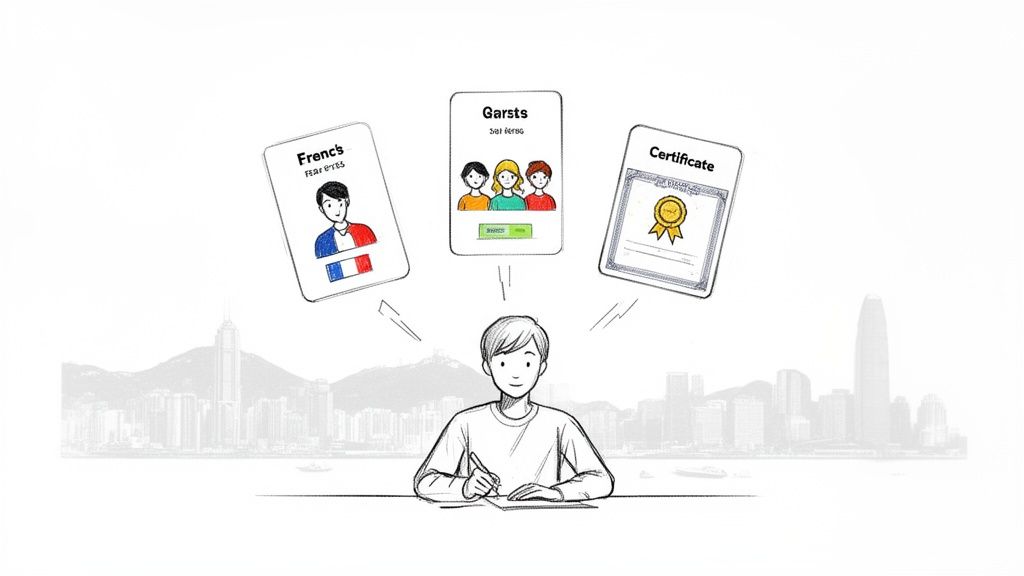
Learners of different ages have vastly different cognitive abilities and learning goals, thus requiring drastically different teaching methods. Imagine a three-year-old child and a teenager preparing for the IB exam; their French courses , in both content and style, would be worlds apart.
The key to successful language learning lies in whether the curriculum design can accurately match the learner's developmental stage. Simply put, preschool classes need to be fun, youth classes need to take into account academic pressure, and adult classes need to emphasize efficiency and practicality.
French for toddlers and children (3–9 years old): Interest development
For children aged 3 to 5 , the primary goal of learning is to "cultivate interest" rather than rote memorization. The curriculum at this stage should completely abandon traditional textbooks and allow children to naturally absorb the intonation and rhythm of French in a stress-free environment through interactive games, French nursery rhymes, and stories.
The French language program for young children offered by the Hong Kong French Teachers Association adopts this model, led by native French speakers , to ensure that children can imitate the most authentic pronunciation and lay a solid foundation for future learning.
As children enter primary school (ages 6-9 ), their cognitive abilities improve, and they can begin to learn simple reading and writing. The curriculum gradually incorporates vocabulary cards, situational dialogues, and role-playing, integrating learning into everyday life. We insist on small class sizes to ensure every child has ample opportunity to speak and build confidence in speaking French. Want to learn more? You can refer to our articles to learn how to plan a French learning path for your child .
French for teenagers (ages 10–16): Bridging academic gaps
As students enter adolescence, they begin to face the pressure of further education. In Hong Kong, whether it's the IGCSE French, IB French, or A-levels in international schools, or the HKDSE French in local schools, systematic learning is required.
Therefore, French courses at this stage must be highly systematic and targeted.
The teaching focus has shifted from simply cultivating interest to building academic skills, including grammatical structure, writing techniques, and critical reading. The course content must closely align with the examination syllabus and be taught by teachers familiar with the Hong Kong examination system to maximize learning efficiency.
Adult and Business Legal Language: Goal-Based
Adults learning French usually have very clear motivations: for career, immigration, travel, or personal interest. Their time is precious, so courses must be efficient and practical. Adult courses will focus more on systematic grammar explanations and practice in real-life scenarios, such as how to write business emails, handle interviews, or master common travel conversations.
In recent years, the trend of Hong Kong people learning a third language has become increasingly apparent. French, with its importance in the international business and cultural fields, is attracting more and more professionals to invest in learning it.
No matter your age, the most important thing when looking for suitable French courses in Tsim Sha Tsui, Hong Kong is to identify your goals. Contact us anytime for a free French proficiency assessment and let us plan the most effective learning path for you.
A comprehensive analysis of mainstream French exams in Hong Kong
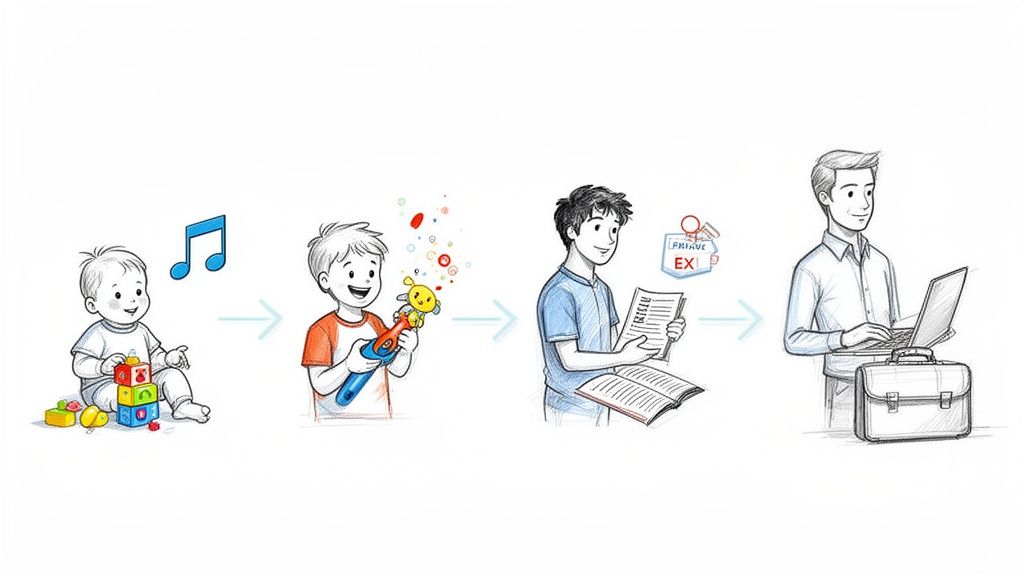
In Hong Kong, French is not only a hobby, but also a highly valuable asset for further education and career development. To objectively prove your French proficiency, taking internationally recognized exams is the most direct and effective method. Understanding the structure and purpose of mainstream French exams in Hong Kong will definitely help you plan your learning path more intelligently.
The French language exams most commonly encountered by Hong Kong students fall into several categories: the internationally recognized DELF/DALF , the IB French within the IB curriculum, the IGCSE French familiar to international school students, and the HKDSE French , which is an option for local DSE candidates. These exams each have their own focus and slightly different levels of recognition, making it crucial to choose the right one.
DELF and DALF: French passports valid worldwide.
The DELF (Diplôme d'Études en Langue Française) and DALF (Diplôme Approfondi de Langue Française) are official diplomas issued directly by the French Ministry of Education, valid for life and recognized worldwide. They are widely regarded as the "gold standard" for assessing the French proficiency of non-native speakers and are fully aligned with the six levels of the CEFR.
DELF : Covers four levels: A1, A2, B1, and B2, ranging from beginner to intermediate-advanced levels.
DALF : Includes two highest levels, C1 and C2, representing fluency and proficiency. It is a commonly used language proficiency certificate for applying to top French universities or for skilled worker immigration.
Of particular note is the DELF B2 certificate, which is extremely prestigious and is usually the minimum requirement for applying to undergraduate programs at French universities. Holders are exempt from the French language proficiency test before university admission, making it a must-have for countless international students.
The appeal of this type of exam lies in its relevance to real life. It comprehensively assesses the four skills of listening, speaking, reading, and writing, and the content is derived from real-life scenarios, making it highly practical.
IB, IGCSE, and HKDSE (French): Closely linked to academic courses.
These types of tests are not independent language tests, but are linked to specific academic courses and are mainly designed for college students. The results directly affect the overall academic score.
IB French : It not only tests language skills, but also emphasizes literary appreciation, cultural insight and critical thinking, and has very high academic requirements.
IGCSE French : These are subjects mostly taught in grades 10-11 of international schools. The difficulty level is roughly equivalent to CEFR levels A2 to B1, paving the way for IB or A-levels.
HKDSE French : This subject falls under Category C Other Languages. The exam paper adopts the AS-level standard of Cambridge Assessment International Education (CAIE) in the UK, broadening the university options for local students.
Comparison of major French language exams in Hong Kong
This table provides a detailed comparison of the goals, content, and acceptance of different French language exams, helping parents and students find the path that best suits them.
Exam Name | Suitable partners | Main uses | Key points of assessment |
|---|---|---|---|
DELF / DALF | All non-native speakers | International language proficiency certificate, studying abroad, immigration, job hunting | A comprehensive assessment of practical listening, speaking, reading, and writing skills relevant to daily life. |
IB French | IB course students | Obtaining an IB Diploma and Applying to Overseas Universities | Language use, literary analysis, cultural understanding, critical thinking |
IGCSE French | International school students in grades 10-11 | Complete secondary school courses and transition to A-levels or IB. | Everyday communication skills, basic grammar and vocabulary |
HKDSE French | Local DSE candidates | Increase DSE elective grades and broaden university subject selection. | AS-level academic language proficiency |
Simply put, DELF/DALF are like independent "French language proficiency certificates" that can be taken at any time; while IB, IGCSE and HKDSE French are "in-school exams" within the curriculum system.
Want to know how to prepare for the exam efficiently? Consider our French exam preparation course . Personalized instruction from experienced native French speakers is the best shortcut to achieving excellent results.
Face-to-face teaching online? Choose the French language school that suits you best
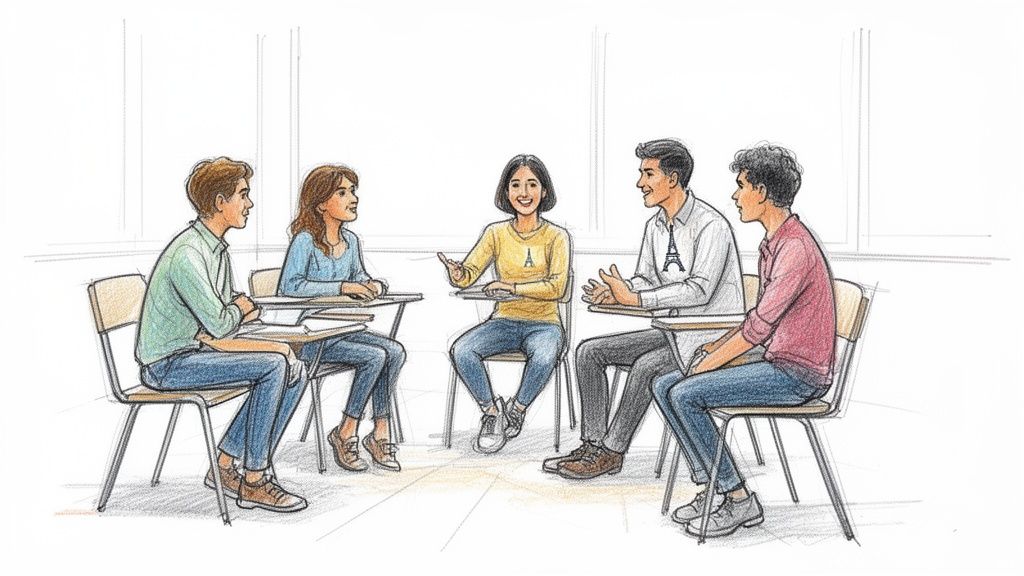
The choice between face-to-face or online French lessons often depends on your learning habits, schedule, and ultimate goals.
Face-to-face classes offer an irreplaceable environment of real-time interaction and immersion, making them particularly suitable for beginners who need discipline and a conducive learning atmosphere. In contrast, online courses offer flexibility and save commuting time, making them an efficient choice for busy Hong Kong residents.
Regardless of your choice, both models of French courses offered by the Hong Kong French Teachers Association maintain the same high standards: taught by native French speakers in small classes to ensure teaching quality.
Face-to-face courses: Unique warmth and value
The biggest advantage of stepping into the classroom in person is the "sense of learning ritual" and the real interactive experience. Teachers can observe your micro-expressions and body language in real time, and more accurately judge whether you truly understand.
Real-time interaction and correction : The teacher can correct pronunciation and mouth shape on the spot, or provide personalized guidance when you feel confused.
An immersive learning environment : Students and teachers share a room and communicate entirely in French, naturally creating a small language environment.
Build a learning community : Meet like-minded classmates, encourage each other, and make the learning process less boring.
If you need more external motivation or a structured learning environment, especially for children and beginners, in-person classes are usually the safest option. We have campuses in Tsim Sha Tsui, Causeway Bay, and Central, all easily accessible.
Online courses: flexibility and efficiency
For Hong Kong people living at a fast pace of life, the convenience of online classes is unparalleled. You no longer need to worry about transportation; as long as you have internet access, you can attend classes anytime, whether at home, in the office, or in a coffee shop.
The core advantage of online courses lies in "time autonomy," allowing learning French to naturally integrate into your life rather than becoming another source of stress.
Please note that the online courses offered by the Hong Kong French Teachers Association are not pre-recorded videos, but rather live, interactive virtual classrooms. We utilize the latest teaching tools to ensure full interaction between you and your teachers, such as screen sharing and group discussions, providing a learning experience identical to that of a face-to-face classroom. Want to learn more about online learning techniques? Please refer to our practical guide to learning French online .
Regardless of which learning mode you prefer, we recommend that you first take a free French proficiency assessment so that our professional team can recommend the most suitable learning plan for you.
Analyzing French course fees, what should you consider first in terms of "cost-effectiveness"?
"How much does it cost to learn French?" This is definitely a question most Hong Kong people ask before enrolling in a course. The price range for French courses on the market is quite wide, mainly depending on the type of course, the teacher's background, and the number of class hours. However, simply comparing prices easily overlooks the most important factor - "cost-effectiveness".
As the saying goes, "you get what you pay for." Investing in courses led by experienced native French teachers may be a bit more expensive, but you will learn the most authentic pronunciation and expression. In the long run, this will save you from taking unnecessary detours and will ultimately save you time and money.
Why are there such large differences in the fees for French courses?
Course types : Private tutoring is one-on-one, with courses completely tailored to individual needs, and is the most expensive; small group classes (usually 2-6 people) are moderately priced and highly interactive; large classes with more than ten people have the lowest unit price, but each student receives relatively limited attention.
Teacher background : Native French teachers with professional teaching certifications charge higher fees than part-time or non-native French teachers, but the teaching quality is more guaranteed.
Course Objectives : Targeted exam preparation classes (such as DELF, IB French) are more in-depth and require higher standards of teachers, and are usually more expensive than regular hobby classes.
When evaluating "cost-effectiveness," one should not only look at the price per hour, but also consider: "How much can I learn in a limited amount of time?" A high-quality small class may be far more efficient than a cheap large class where the teacher is too busy to give individual attention.
How to plan your budget and make smart choices?
Before choosing a course, the best practice is to take a free French proficiency assessment . This helps schools accurately understand your level and needs, recommend the most suitable course, and avoid wasting money and time by enrolling in the wrong class.
For example, the French Teachers' Association of Hong Kong offers transparent fees and emphasizes the value of small class sizes. We believe that providing high-quality teaching in easily accessible locations like Causeway Bay is the most responsible investment in students. To understand the recognition of different exams, you can read our DELF Exam Guide, which will help you determine which course offers the highest return on investment.
Contact us now and let us design the most cost-effective French learning program for you based on your budget and goals.
French Courses in Hong Kong FAQ
1. Will it be difficult to learn French if you have no basic knowledge?
French grammar and pronunciation rules are indeed more complex than English, and beginners may find verb conjugation or noun masculine and feminine gender confusing. However, as long as you follow a systematic French course taught from the basics by an experienced native French speaker , you will find that French is very structured. Most importantly, be willing to speak and practice; naturally, you will become more and more fluent.
2. How long does it take before I can chat with a Frenchman?
Progress varies from person to person, but generally speaking, if you attend classes regularly every week and take time to review, you can master basic daily conversations, such as introducing yourself, asking for directions, and ordering food, in about 3-6 months. To reach a more fluent level (approximately CEFR B1 level), you usually need to continue learning for a year or more.
3. What are the practical uses of learning French in Hong Kong?
Beyond personal interest, French is becoming increasingly valuable in Hong Kong. Whether for preparing for public examinations such as IB French , IGCSE , or HKDSE to aid in further education, or in the workplace (especially in industries such as luxury goods, hotels, and finance), being fluent in French is definitely a major advantage.
4. Is it better to provide private tutoring with small class teaching?
It depends on your goals. If your goals are clear, such as needing to prepare for exams or interviews in a short period, or if your class schedule is irregular, one-on-one private French tutoring is more efficient. However, if you prefer to learn in an interactive environment and meet like-minded friends, small group classes (2-6 people) offer better value for money and a more conducive learning atmosphere.
5. Why should I study with a native French teacher?
Because native language teachers can teach you the most authentic and pure pronunciation and intonation, as well as the vocabulary that French people actually use in daily life, you can avoid learning "Hong Kong-style French." More importantly, they can share French cultural knowledge beyond the textbook, making the learning process more vivid and interesting.
Want to find the most suitable French learning path for yourself or your children? Contact the French Teachers Association of Hong Kong today! We can arrange a free French proficiency assessment for you and provide you with the most professional advice at our school in Central!
Comments